AIDAQ 2026 Day 1: Different perspectives on what comes next
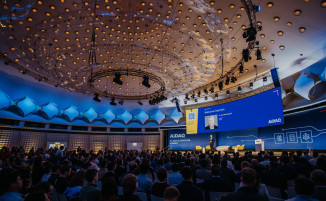
From AI, Data and Quantum to investment, trust and technological sovereignty: Day 1 of AIDAQ 2026 brought a wide range of perspectives to Berlin. And the conversations reached far beyond the stages. Across keynotes, panels, workshops and discussions in the exhibition, one question kept returning: How can Europe turn technological change into economic and societal progress?
The opening already pointed towards one recurring theme: moving from potential to action. “Speed is of the essence – let’s not be amazed. Let’s do something,” said Dr Ralf Wintergerst, President of Bitkom. At the same time, he highlighted another aspect of technological sovereignty: having choices – between technologies, partners and providers.
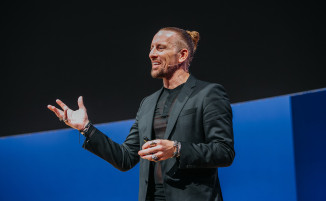
That focus on action was complemented by a different perspective from Anders Indset, frontier-tech investor, philosopher and author. In his keynote on the quantum economy, he challenged the tendency to jump too quickly to answers: “We jump onto solutions. We have to understand the problem.”
A reminder that navigating technological change is not only about predicting what comes next, but about recognising what is changing and deciding what to do with it.
But progress is not only a question of technology. Trust, ecosystems and the conditions for innovation featured prominently throughout the day. In her fireside chat, Dr Alexandra-Gwyn Paetz, Head of the Department for Technological Sovereignty and Innovation at the Federal Ministry of Research, Technology and Space, connected AI development with research, evaluation and trust: “We want to see a strong ecosystem, not just individual companies.”
What such an ecosystem needs in practice was also at the heart of the panel “Upgrading Germany’s Technology Playbook”. Ina Schlie, Dr Johannes Otterbach, Franziska Brantner and Julia Beck explored how Germany can create better conditions for technology companies to grow – from bringing startups and customers together earlier to rethinking funding, capital allocation and the willingness to take risks.
The question of sovereignty became even more tangible when the focus shifted to quantum. In the session “Europe at the Inflection Point: AI, Quantum and the Sovereignty Question”, Manousos Markoutsakis and Claudia Nemat discussed the implications of quantum technologies for industry, AI, data and security – and the ecosystems needed to turn technological capabilities into real applications.
And while many conversations focused on what can be done today, others looked further ahead.
The AI Vision panel “Transformative AI and AGI – What Must Germany and Europe Do Now?” brought together Ralph Brinkhaus, Sergey Lagodinsky, Wibke Reincke and Daniel Privitera to explore what increasingly capable AI systems could mean for Europe and how politics, business and society can prepare for developments whose timelines remain uncertain.
Day 1 also showed just how international the conversation around emerging technologies has become. AIDAQ provided the stage for the launch of the new Nasscom EU Forum, designed to deepen cooperation between India and Europe across AI, digital technologies, cybersecurity, semiconductors and other emerging technologies.
Rajesh Nambiar brought the Indian perspective to the programme, before representatives from India, Brazil, Canada and Germany discussed how bilateral AI partnerships can translate into concrete technological and economic cooperation.
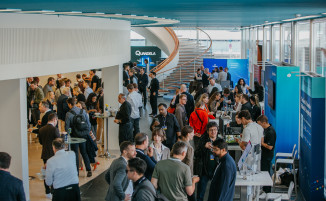
International exchange extended beyond the main stages. An Austria-Germany session explored collaboration in quantum technologies, while the International Partners Corner brought together organisations and ecosystems from Austria, India, Ukraine and several African countries.
The message across these formats was clear: strengthening Europe’s technological capabilities and building international partnerships are not competing ambitions. Increasingly, they belong in the same conversation.
These are just some of the perspectives that shaped a much broader first day of #AIDAQ26 – on stage and beyond it.
Day 2 picks up where Day 1 left off: with more questions to explore, more perspectives to connect and another full programme across AI, data and quantum.